
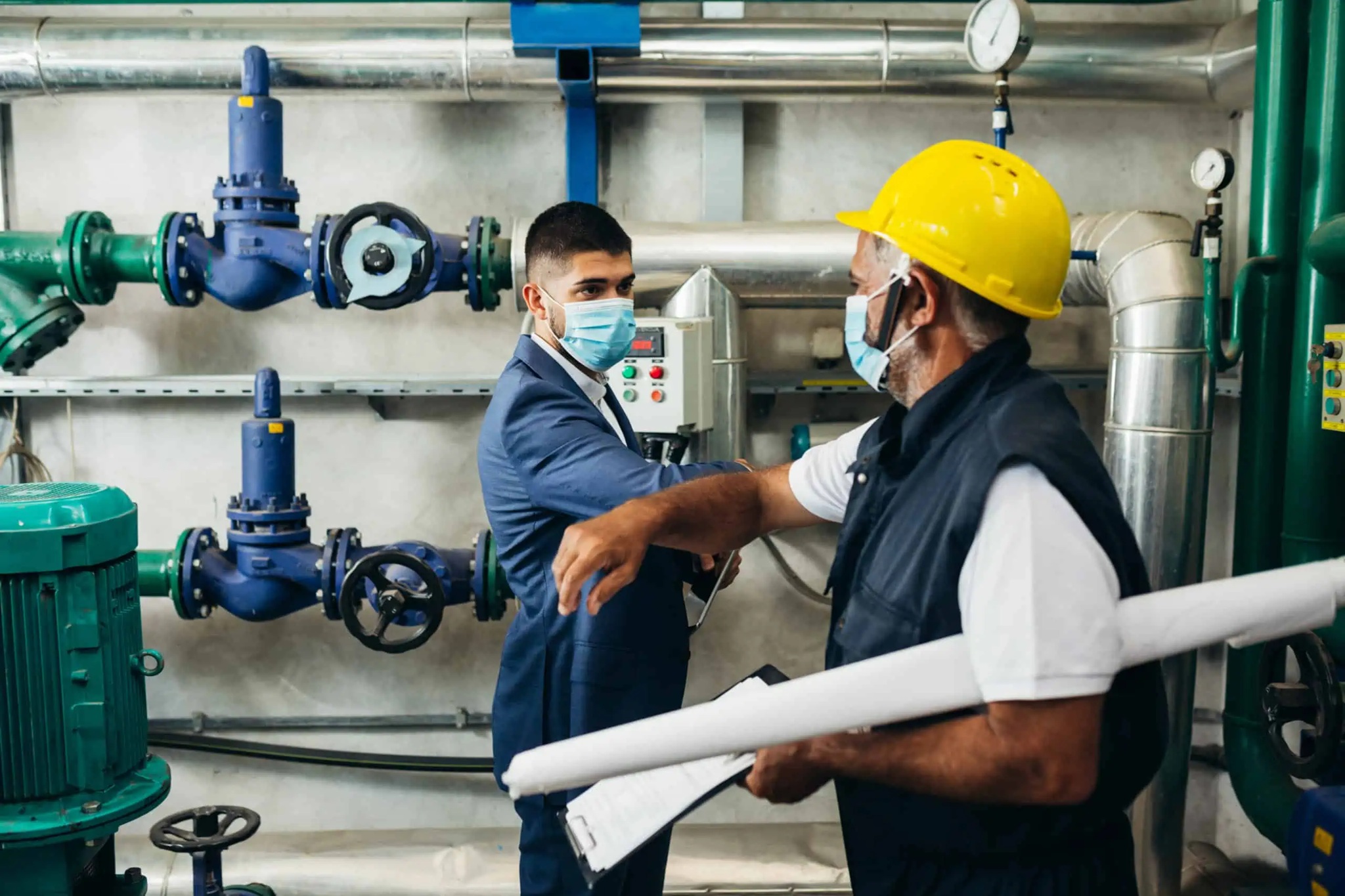
A medical contract manufacturer functions much like a keystone species within an industrial ecosystem, providing essential services upon which numerous other organisms, in this case medical device innovators, depend for survival and growth. The relationship exhibits remarkable parallels to symbiotic partnerships observed throughout nature, where specialisation and mutual benefit drive evolutionary success. Just as certain species evolve to occupy specific ecological niches with extraordinary efficiency, these manufacturing specialists have adapted to occupy a crucial position in the medical technology landscape, possessing capabilities that device developers cannot economically replicate independently. Understanding this manufacturing ecosystem requires examining the selective pressures, adaptive strategies, and systemic relationships that define its operation.
The Evolution of Manufacturing Specialisation
The emergence of the medical contract manufacturer reflects principles observable across biological and industrial systems: specialisation yields efficiency. In nature, organisms that attempt to master every survival skill simultaneously rarely outperform specialists adapted to specific demands. Medical device companies face a fundamental choice: invest resources developing manufacturing expertise alongside product innovation, or partner with entities possessing refined manufacturing capabilities.
This specialisation arose through adaptation to selective pressures. Regulatory complexity increased steadily, demanding expertise in quality systems and compliance frameworks. Capital requirements escalated. Technical knowledge spanning materials science and process engineering became increasingly specialised. Companies maintaining all capabilities internally discovered resource allocation inefficiencies.
Singapore’s Manufacturing Niche
Singapore’s position within the global manufacturing ecosystem demonstrates how environmental conditions shape specialisation. The healthcare contract manufacturing market projects growth to USD 1,832.8 million by 2030, representing 7.4 per cent compound annual growth rate. Medical devices constitute the fastest-growing segment.
The medical device outsourcing market, where contract manufacturing commanded 54.74 per cent revenue share in 2022, projects expansion to USD 857.1 million by 2030 at 13.6 per cent growth. Strong intellectual property protections provide security analogous to territorial boundaries in ecology. ISO 13485 certification represents baseline adaptation for ecosystem participation.
By 2030, one in four Singaporeans will exceed 65 years, the highest proportion among ASEAN nations. This drives demand for devices addressing age-related conditions. The medical device market, valued at USD 3.5 billion in 2022, with over eighty per cent satisfied through imports and government hospitals consuming seventy-five per cent, demonstrates both scale and stability.
Reliability Through Systematic Adaptation
Reliability in medical contract manufacturer operations emerges not from single innovations but from systematic integration of multiple adaptive strategies. Quality management represents the foundational adaptation, analogous to basic metabolic processes supporting all higher functions.
These systems incorporate several critical elements:
• Validated processes
Manufacturing protocols undergo rigorous validation demonstrating reproducible outcomes. Like genetic mechanisms ensuring accurate replication, these processes produce consistent results across production cycles, preventing variation that could compromise device performance or patient safety.
• Environmental controls
Cleanroom classifications, temperature regulation, and humidity management create controlled conditions analogous to homeostatic mechanisms maintaining internal stability despite external fluctuations. These controls prevent contamination whilst optimising process efficiency.
• Traceability architectures
Complete material and process traceability enables rapid response to quality deviations. Similar to immune system memory identifying threats, these systems quickly isolate affected production batches and trace distribution pathways, containing problems before widespread impact occurs.
• Supplier ecosystems
Material quality depends upon supplier relationships exhibiting mutual benefit characteristics. Rigorous qualification processes select suppliers demonstrating consistent capability, whilst ongoing monitoring ensures continued performance, creating stable supply networks.
• Continuous monitoring
Statistical process control provides real-time feedback analogous to sensory systems detecting environmental changes. Early deviation detection enables corrective intervention before defects occur, maintaining process stability through dynamic adjustment.
Scalability as Adaptive Flexibility
Scalability represents a medical contract manufacturer’s ability to adjust production volumes responding to demand fluctuations, exhibiting flexibility analogous to phenotypic plasticity in organisms facing variable environments. This proves valuable for companies whose demand varies across development stages and market cycles.
Production infrastructure must accommodate volume changes without compromising quality. Multi-product facilities demonstrate parallel processing capabilities. Modular equipment configurations enable capacity adjustments matching demand patterns. Singapore’s position as a transportation hub facilitates scalable operations through efficient material sourcing and product distribution, paralleling biological vascular networks enabling resource distribution.
The Competitive Advantage of Interconnectedness
The medical contract manufacturer ecosystem exhibits network effects where value increases with connectivity. Individual manufacturers develop specialised capabilities, whilst their collective knowledge advances the sector’s technical frontier. This mirrors scientific communities where distributed expertise enables discoveries impossible through isolated effort.
Technology transfer operates bidirectionally. Device innovators contribute product-specific knowledge, whilst manufacturers provide manufacturing science expertise. This knowledge exchange accelerates innovation beyond what vertical integration achieves. Regional clusters amplify these effects, creating talent pools and knowledge spillovers benefiting all participants.
Conclusion
The medical contract manufacturer occupies a position within the medical technology ecosystem characterised by specialisation, adaptation, and systemic integration. Singapore’s sector exemplifies successful niche occupation, supported by favourable regulatory environments, technical infrastructure, and demographic trends driving sustained demand. As medical device complexity increases and development costs rise, the selective advantages of partnering with specialist manufacturers intensify. The future belongs to companies recognising that competitive success requires focus on core competencies whilst leveraging specialist capabilities for supporting functions, a strategy as fundamental to industrial success as it is to evolutionary fitness. The ecosystem perspective reveals that thriving medical device innovation depends increasingly upon the reliable, scalable production capabilities provided by a qualified medical contract manufacturer.